
mTLS in Practice: Certificates for Service Auth
Mutual TLS makes the client prove its identity with a certificate too. Here is the nginx config, the client commands, and the error you get when one is missing.
Read more
RSA vs ECDSA: Choosing Certificate Key Algorithms
ECDSA P-256 is the right default for new certificates: smaller keys and faster signing, with RSA as a fallback for legacy clients. Numbers, commands, config.
Read more
Wildcard vs SAN Certificates: Choosing the Right One
A wildcard covers every subdomain from one key; a multi-SAN cert names each host. One hides your hostnames, the other limits the damage. Default to named certs.
Read more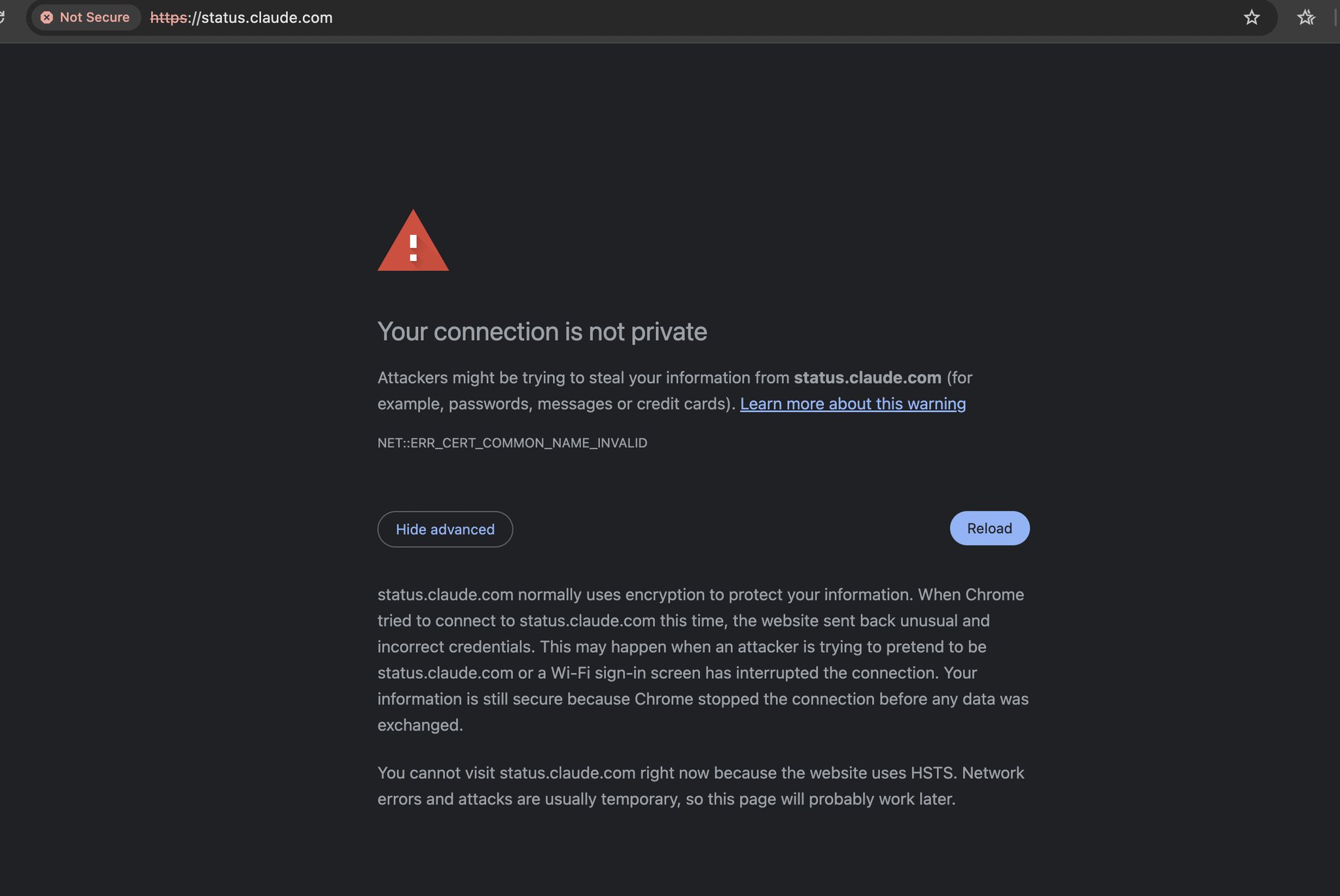
When a Certificate Takes Down the Status Page
On August 14, 2026, an invalid TLS certificate blocked Claude's own status page. If a near-trillion-dollar company can miss a certificate, so can you.
Read more
Why Certificate Chains Break (and How to Catch It)
A certificate chain that works in your browser can fail for API and mobile clients. Here is why chains break and how to verify one from outside.
Read more
CAA Records: Controlling Who Can Issue Your Certificates
A CAA record names which CAs may issue certificates for your domain. One DNS line closes off a whole class of mis-issuance. Here is how to use it.
Read more
OCSP Is Going Away: How Revocation Is Changing
Let's Encrypt shut off its OCSP responders in 2025, but most CAs still run theirs. Here is where revocation stands and how to check what your certs carry.
Read more
Post-Quantum TLS: What Certificate Owners Should Know
Quantum-resistant algorithms are landing in TLS now, not in some distant future. Here is what is changing for certificates and what to do before it reaches you.
Read more
SSL Certificate Expired: What Breaks and How to Fix It
An expired SSL certificate fails closed: browsers block the page and API clients refuse to connect. Here is what breaks and how to fix it fast.
Read more
How to Renew an SSL Certificate Before It Expires
Renewing an SSL certificate is more than clicking renew. Here is the full process, automated and manual, how to deploy it everywhere, and how to verify it took.
Read more
ACME and Automating Certificate Renewal at Scale
As certificate lifetimes shrink, manual renewal stops scaling. Here is how ACME automates issuance and renewal, and where automation still quietly breaks.
Read more
SSL Certificate Monitoring: The Complete Guide
SSL certificate monitoring tracks expiry, chains, and issuance across every endpoint you run. Set it up so a certificate never takes down production.
Read more
Certificate Transparency and Rogue Issuance
Every publicly trusted certificate is logged to CT logs, so any certificate issued for your domain is public. Here's how to monitor for unauthorized issuance.
Read more
Why Certificate Lifetimes Are Getting Shorter
The CA/Browser Forum has mandated a phased reduction in TLS certificate validity, reaching a 47-day maximum by 2029. Here's the timeline and impact.
Read more
Certificate Monitoring and Let's Encrypt
Let's Encrypt and ACME automation make certificate management nearly frictionless. But automation can fail silently, and you won't know until you're down.
Read more
SSL Certificate Renewal Checklist
A working checklist for renewing TLS certificates without causing an outage. Covers planning, validation, and post-deployment verification.
Read more
How to Audit Your SSL Certificate Inventory
Most certificate outages stem from certificates the ops team didn't know existed. Build a complete inventory using DNS, CT logs, and internal discovery.
Read more
SSL Certificate Expiry Response Playbook
A certificate just expired in production. Here's the triage order, the fastest ways to restore service, and what to document before the incident closes.
Read more
SSL Certificate Expiration Monitoring
Expired certificates cause predictable, avoidable outages. Here is how SSL certificate expiration monitoring works and how to set alerts that fire in time.
Read more